Karakteristik anatomi dan histokimia rimpang tiga jenis paku Polypodiaceae epifit dari Provinsi Riau
DOI:
https://doi.org/10.24843/JBIOUNUD.2026.v30.i01.p10Keywords:
anatomi, histokimia, paku epifit, fitokimiaAbstract
Jenis tumbuhan paku dari famili Polypodiaceae pada umumnya merupakan paku epifit. Jenis-jenis tersebut sering digunakan sebagai bahan terapeutik alami untuk kesehatan karena adanya kandungan fitokimia yang bersifat farmakologis. Tujuan dari penelitian ini adalah untuk mengkaji karakteristik anatomi dan histokimia rimpang tiga jenis paku epifit Polypodiaceae dari Provinsi Riau. Spesimen yang digunakan dalam penelitian ini adalah Goniophlebium percussum, Microsorum scolopendria, dan Pyrrosia piloselloides. Spesimen diambil di lapangan dengan metode ekplorasi. Preparat natomi dibuat menggunakan metode non-permanen. Uji histokimia dilakukan dengan metode kualitatif untuk menguji senyawa alkaloid, flavonoid, lipid, dan tanin jaringan pada rimpang. Struktur anatomi rimpang semua jenis menunjukan tipe berkas pengangkut konsentris amfikribal dengan stele diktiostele. Hasil uji histokimia menunjukkan bahwa rimpang dari semua jenis tumbuhan paku yang diteliti mengandung senyawa alkaloid, flavonoid, tanin, dan lipid, namun konsentrasi masing-masing senyawa pada setiap jaringan berbeda-beda setiap jenisnya. Kandungan senyawa fitokimia tertinggi dijumpai pada P. piloselloides (alkaloid, tanin, lipid), G. percussum (flavonoid) dan M. scolopendria (lipid). Hasil kajian ini memberikan informasi dasar mengenai kandungan golongan senyawa yang diuji pada ketiga jenis paku epifit dari famili Polypodiaceae.
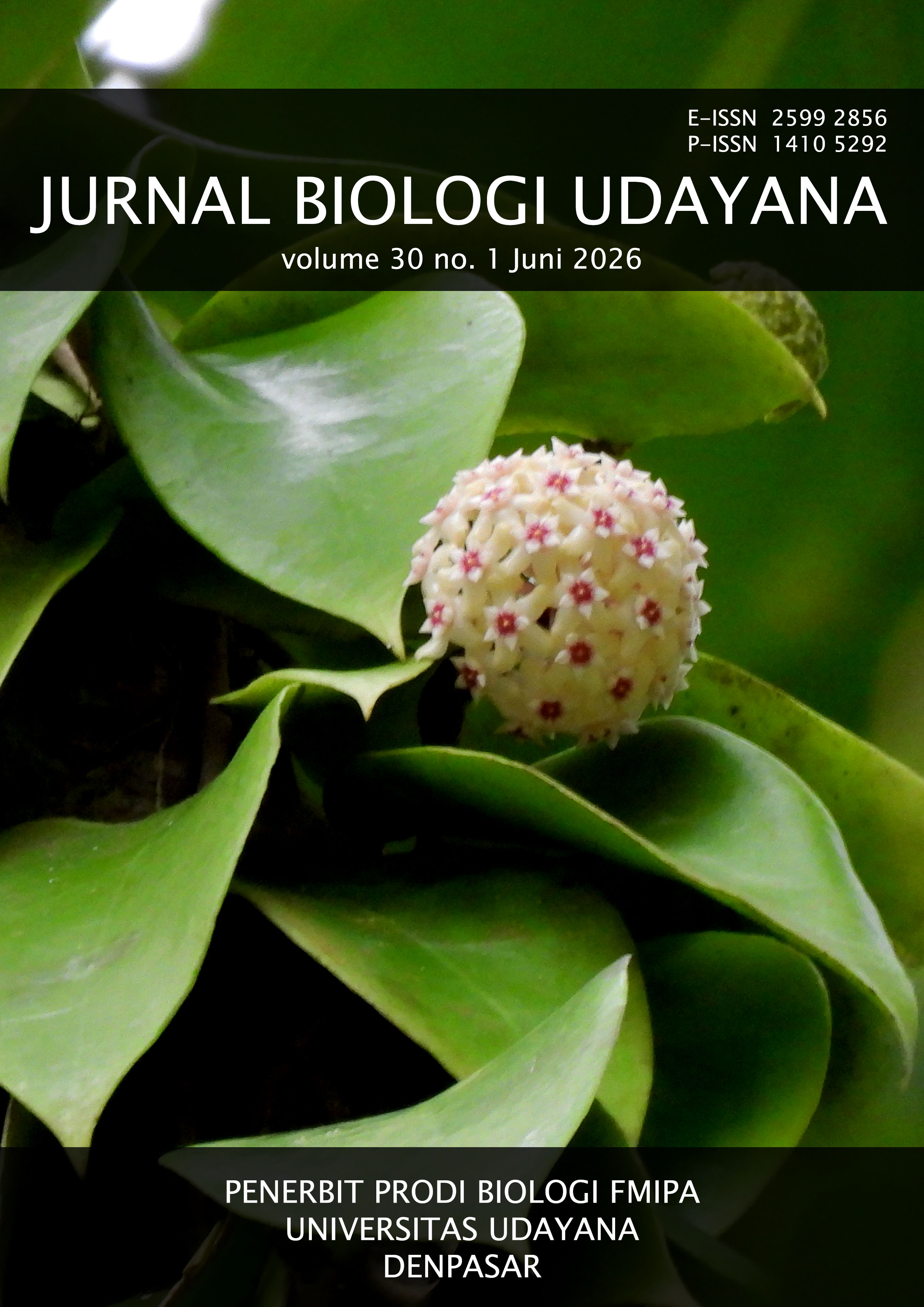
Downloads
Published
Issue
Section
License
Copyright (c) 2026 Nery Sofiyanti, Dyah Iriani, Anni Latifah Siregar, Encik Elsa Daffa Nafisa

This work is licensed under a Creative Commons Attribution 4.0 International License.
License Term
All articles published in Jurnal Biologi Udayana are open access and licensed under the Creative Commons Attribution 4.0 International License (CC BY 4.0). This means that anyone is free to:
-
Share — copy and redistribute the material in any medium or format.
-
Adapt — remix, transform, and build upon the material for any purpose, even commercially.
However, this is granted under the following conditions:
-
Attribution — You must give appropriate credit, provide a link to the license, and indicate if changes were made. You may do so in any reasonable manner, but not in any way that suggests the licensor endorses you or your use.
-
No additional restrictions — You may not apply legal terms or technological measures that legally restrict others from doing anything the license permits.
By submitting an article to Jurnal Biologi Udayana, authors agree to the publication of their work under this open access license. The authors retain the copyright of their work, but grant Jurnal Biologi Udayana the right of first publication.
For more information about the CC BY 4.0 license, please visit the official website: https://creativecommons.org/licenses/by/4.0/