Digital Communication for Empowering Small -Scale Livestock Farmers
DOI:
https://doi.org/10.24843/ijoss.2026.v02.i01.p07Keywords:
Communication, Digital, Literacy, Livestock, SustainableAbstract
BACKGROUND AND OBJECTIVES:
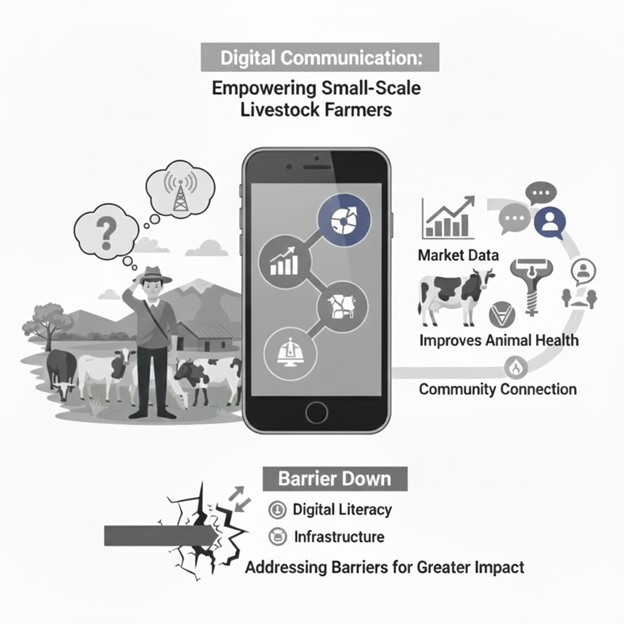
Farmers in rural East Kalimantan face significant challenges, including limited access to information, low digital literacy, and inadequate technology infrastructure, which hinder the implementation of sustainable farming practices. Despite the increasing availability of digital communication tools and platforms, farmers in remote areas continue to struggle with utilizing technology to manage livestock operations, access markets, and enhance animal health. This study aims to examine the use of digital communication tools by small-scale livestock farmers in East Kalimantan, as well as the benefits they gain and the barriers that limit wider adoption. The objective of this research is to understand the role of digital communication in supporting sustainable livestock practices in rural communities.
METHODS:
This study employs a qualitative approach, utilizing semi-structured in-depth interviews and focus group discussions (FGDs) with farmers, agricultural extension officers, and relevant stakeholders. The research was conducted in East Kalimantan Province, Indonesia, which was selected for its significant challenges, including limited access to technology and low digital literacy among farmers. Despite these challenges, East Kalimantan also holds great potential for the development of sustainable livestock farming, particularly through the use of digital communication tools. The data was analyzed thematically to identify patterns related to technology adoption, perceived benefits, barriers, and the contribution of digital tools to sustainable livestock management.
FINDINGS:
The study's findings reveal that farmers utilize smartphones, mobile apps, and social media platforms to access market information, livestock health consultations, and knowledge about sustainable farming practices. The adoption of advanced technologies such as the Internet of Things (IoT) and automation systems remains limited due to high costs, limited digital skills, and weak internet infrastructure. Farmers reported benefits such as improved animal health, better decision-making, and increased efficiency in livestock management; challenges related to digital literacy and access to technology remain significant.
CONCLUSION:
Digital communication tools have significant potential to enhance sustainable livestock practices among small-scale farmers in rural areas. Several key barriers, primarily the digital literacy gap, infrastructure limitations, and high technology costs, need to be addressed for wider adoption. Strengthening digital training programs, improving internet connectivity in rural areas, and supporting farmer-centered technological initiatives are important steps to maximize the benefits of digital tools. This study contributes to the understanding of digital empowerment in rural livestock farming, emphasizing the need for integrated policy interventions. The limitations of this research include its focus on a single region and a relatively small sample size, indicating the need for further, broader, and comparative research