
Food Safety And Choices Among Workers: Socio-Economic Dynamics And Food Choice Motives
DOI:
https://doi.org/10.24843/ijoss.2025.v01.i01.p01Keywords:
Agribusiness, Sustainability, Consumption, Food, WorkersAbstract
BACKGROUND AND OBJECTIVES
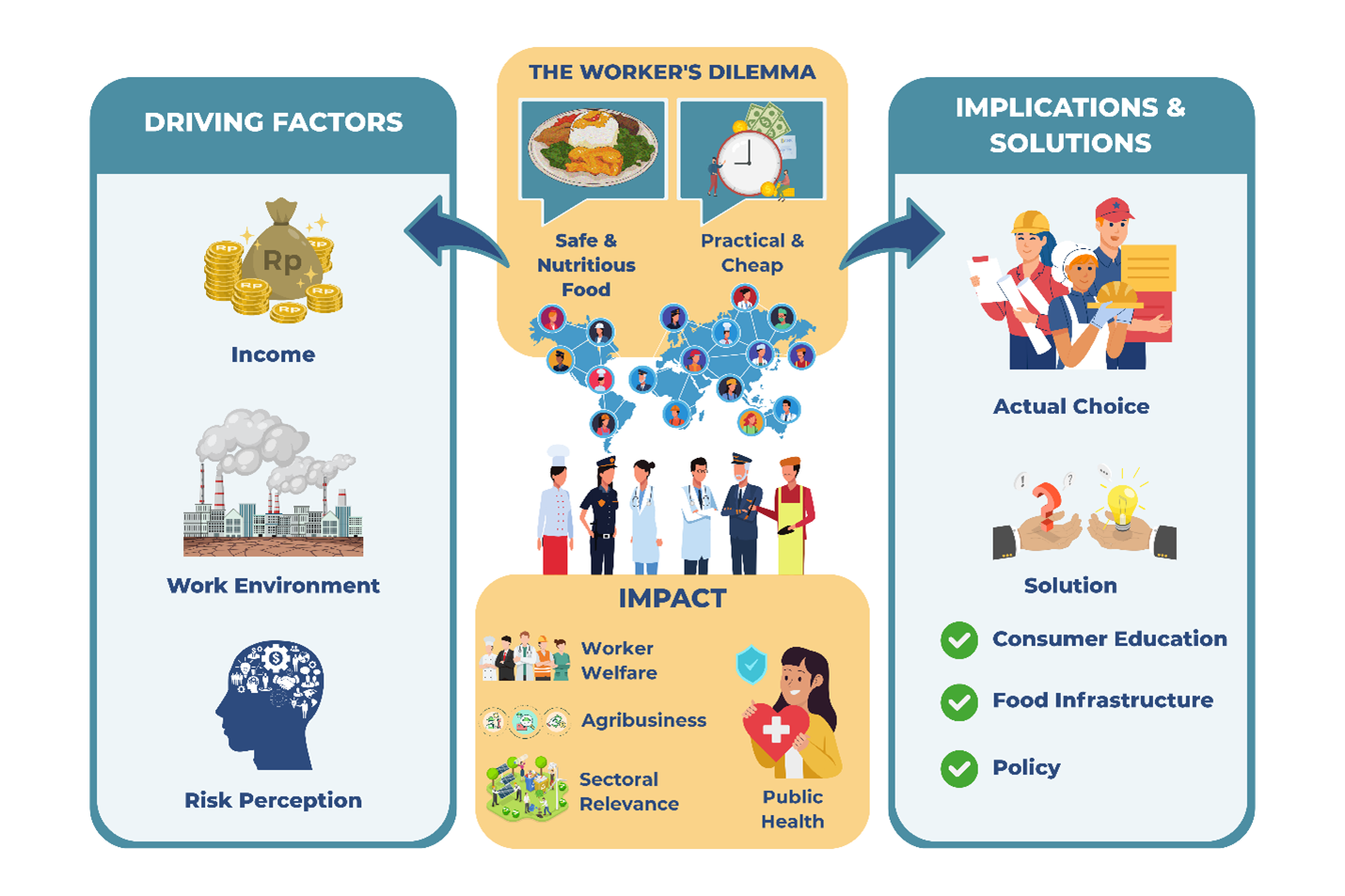
Workers, especially those in the informal and low-income sectors, often face the dilemma of fulfilling their need for safe and nutritious food. The main problem that emerges is the economic limitations that encourage them to choose food based on price and practicality, even though these choices may ignore the safety and nutritional value of the food. In addition, access to healthy food is often limited due to unsupportive working conditions, low food literacy, and lack of regulations or supporting infrastructure in the work environment. This phenomenon indicates a gap between awareness of the importance of healthy food and the ability to realize it in daily practice. This study examines how socio-economic dynamics such as income, market access, education level, and cultural norms influence workers' food preferences and food safety considerations. It also aims to understand how risk perception and work environment conditions shape the workers' consumption patterns.
METHODS
The research method used in this study was a literature study utilizing online sources such as Google Scholar, Scopus, and Science Direct.
FINDINGS
The results of this study show that economic limitations often encourage workers, especially in the informal sector or those on low incomes, to prioritize food affordability and practicality. This often overrides nutritional quality and food safety, even though they are aware of risks such as contamination and poor hygiene standards. On the other hand, workplace conditions and risk perception significantly influence workers' food consumption behavior; workers with low-risk perceptions tend to prefer food practicality, while those with high-risk perceptions face a dilemma between maintaining health and limited resources.
CONCLUSION
The study concluded that integrating food safety aspects with consumer education programs and improving the quality of food infrastructure plays a crucial role in improving workers' welfare. These measures are expected to reduce health risks and support labor productivity. The findings also provide valuable insights relevant to agribusiness sector development and the design of public health initiatives
Downloads
Published
Versions
- 2025-08-23 (4)
- 2025-08-23 (3)
- 2025-08-23 (2)
- 2025-07-10 (1)